Introducing: Golden Glass UI
Golden Glass is Rkive's design language for the AI-native OS: a system of intelligent environments where AI and humans work continuously across time. It keeps content at the center while interface behavior adapts through depth, space, and intentional transparency.
Golden Glass introduces the interaction language for Rkive's AI-native OS. Designed as an intelligent environment rather than a dashboard, it uses depth, spatial continuity, and controlled transparency to keep context visible while tools adapt in real time. Built for continuity across recording, editing, strategy, and analysis, Golden Glass is the UI foundation for a system where Studio is the first environment in a broader operating model.
Introducing: Golden Glass UI
The design language for intelligent environments
Content creation should not feel like operating a machine.
It should not feel like managing a control panel, forcing rigid sequences, or fighting a screen full of controls. Creation is contextual work across thinking, recording, editing, and distribution. The interface should support that continuity, not interrupt it.
That idea is at the core of Golden Glass, the design language behind Rkive.
Golden Glass is not a theme, and it is not a visual refresh. It is the interaction language for an AI-native OS built as a system of intelligent environments.
An environment, not a tool
Most creator software is still designed like a machine.
Flat surfaces. Dense panels. Everything visible all the time. You spend attention navigating UI instead of staying with the work.
Golden Glass takes a different direction.
The interface behaves as an environment. There is depth, space, and continuity. Elements exist in relation to one another. Controls surface when needed, recede when not, and avoid competing with the content itself.
This is not about hiding capability. It is about reducing cognitive overhead through spatial logic. When things live somewhere instead of everywhere, orientation becomes natural. You can move faster without losing context.
Your content remains the center of gravity.
Present, not invisible
Golden Glass does not try to make interface disappear.
It aims to make it precise and comfortable to work inside.
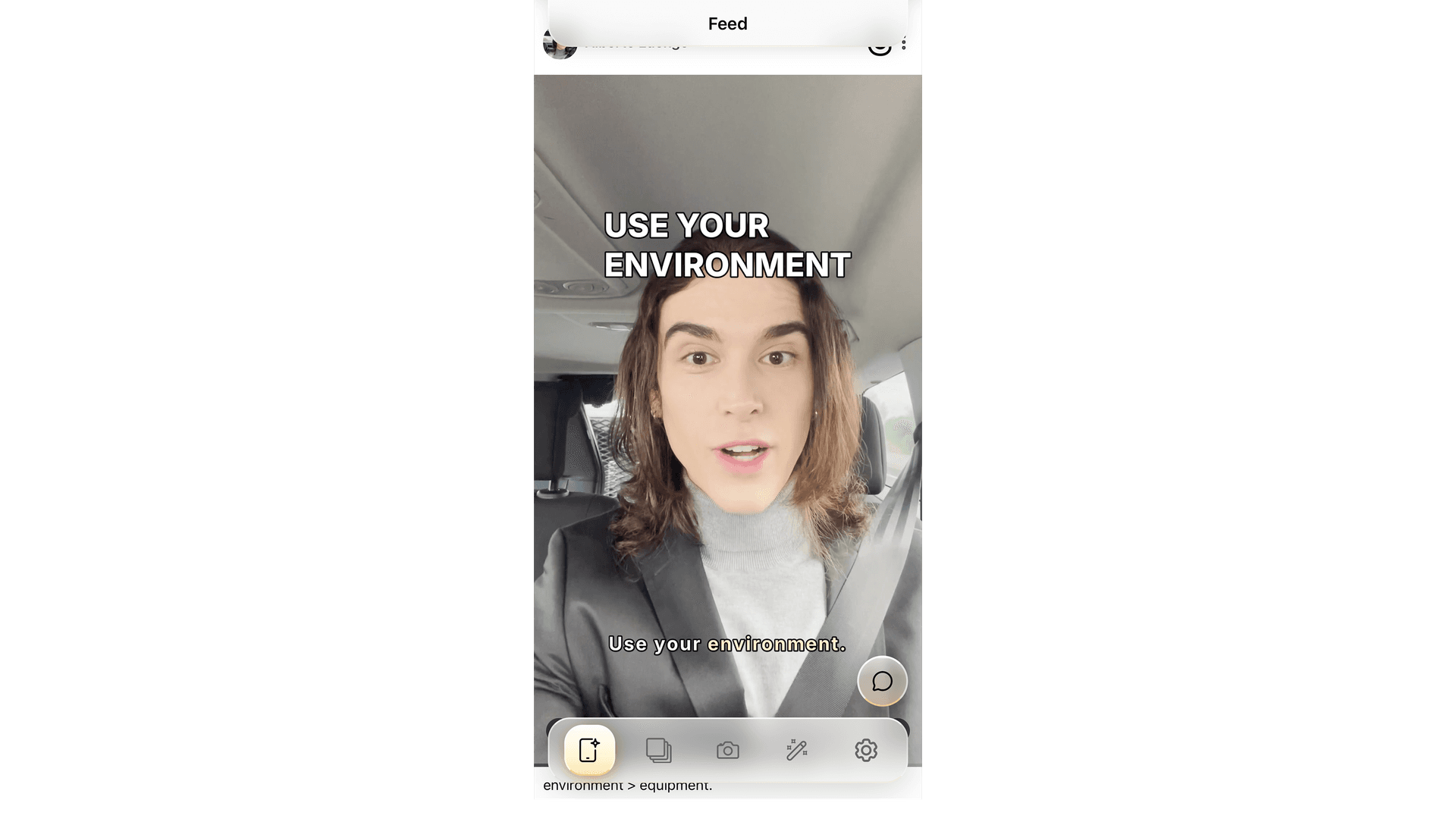
The UI is visible, tactile, and responsive without becoming loud. Glass-like surfaces, controlled transparency, and continuous motion keep the system legible while preserving attention on what matters.
Content is not buried behind panels. Panels do not block context. The interface lives with your work, not on top of it.
This matters because in Rkive, recording, editing, strategy, performance analysis, and AI interaction are often happening in one continuous loop.
Transparency with intention
Transparency in Golden Glass is not decoration.
It exists because continuity depends on visible context.
You should be able to:
- read a teleprompter while seeing what you are recording
- follow a script while capturing POV or multi-clip footage
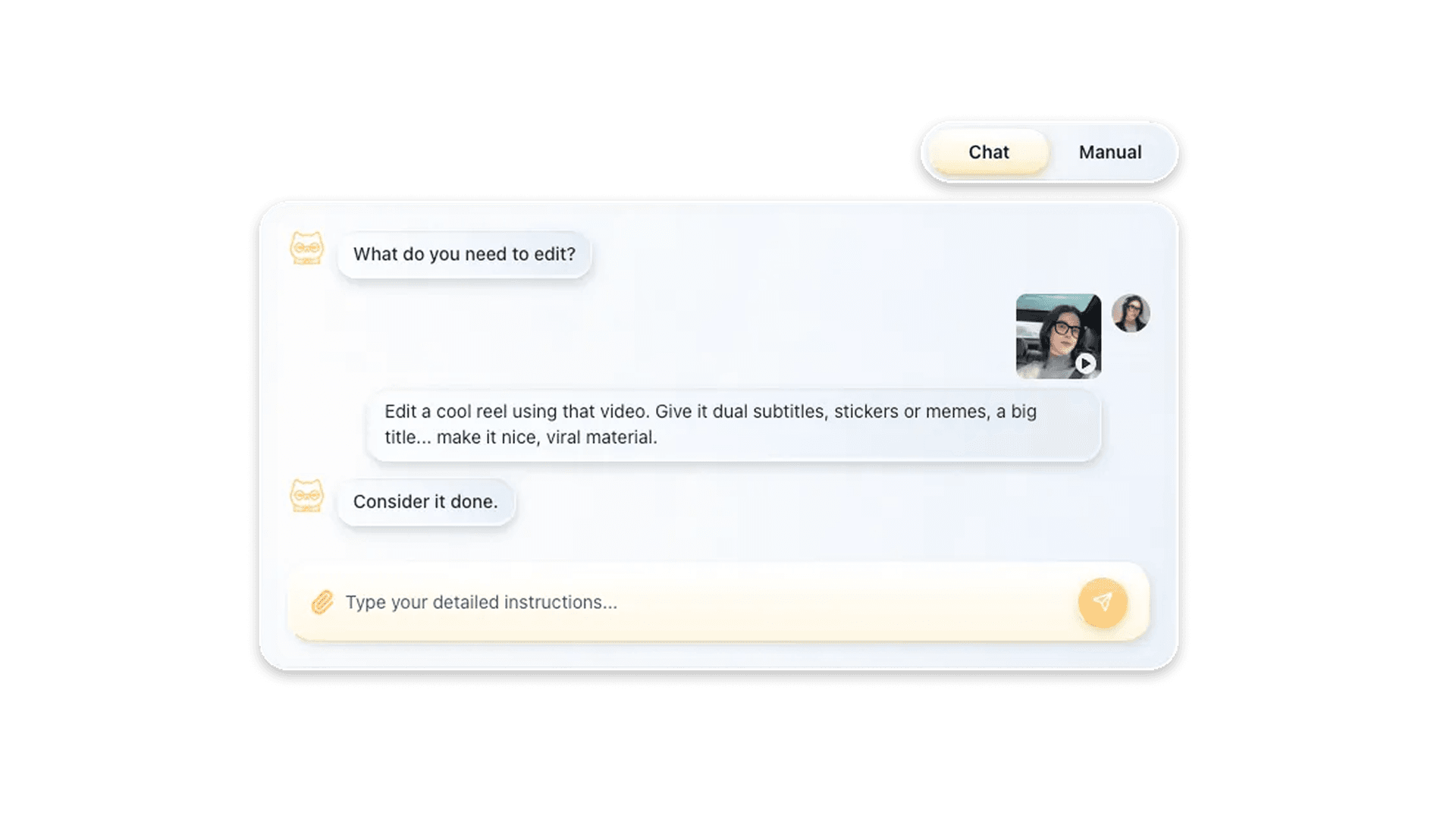
- direct Rkive while seeing your content evolve
- review performance and strategy without losing visual orientation
The teleprompter, for example, is not only for speaking to camera. It guides recording flow while keeping you connected to scene and intent.
Transparency keeps context intact. The interface guides, but it does not isolate.
Golden, not crystalline
We did not call it Glass by accident, and we did not call it Liquid Glass either.
We respect bold moves in interface design. When teams challenge old patterns and push interaction forward, even imperfectly, the field improves.
Golden Glass is in conversation with that spirit, but it moves differently.
Where much of modern glass design is cold, neutral, and crystalline, Golden Glass is warm. Not only because it aligns with our brand, but because we wanted the interface to feel like an environment, not a surface.
Golden also nods to a period in technology when design was expressive, ambitious, and unmistakably opinionated.
A quiet nod to a golden age
Golden Glass is influenced by a period when technology embraced character.
The translucent plastics of early Macs.
The see-through Game Boys.
The environmental animation and sound language of the PlayStation 2 boot sequence.
The feeling that software and hardware had presence.
That era treated technology as experiential, not only functional. It was expressive without becoming chaotic.
Golden Glass carries that attitude forward for a world where AI, synchronization, and cross-device continuity are foundational.
Opinionated by design
Golden Glass is intentionally not neutral.
It prioritizes clarity, flow, and long-session comfort over raw interface density.
Depth and spacing reduce visual stress. Motion communicates state changes. Layering communicates priority. Elements do not collide in a flat plane.
The tradeoff is not complexity. The system becomes easier to read because the interface carries more of the orientation workload.
Built for the AI-native OS
Rkive is not a traditional editor.
It is an applied AI system that reasons over your archive, responds to performance signal, and collaborates with you continuously across time.
Golden Glass is the interface architecture for that reality.
Instead of forcing rigid workflows, it enables a shared operating environment between human direction and AI execution. You are not issuing isolated commands to a tool. You are working inside an adaptive environment that maintains continuity.
Studio is the first intelligent environment where this language is visible at scale. The same design logic extends as the broader AI-native OS expands.
"Golden Glass is not about making editing prettier. It is about defining how intelligent environments should feel when humans and AI are working continuously in the same system."
- Alberto Luengo, CEO & Founder
One environment, everywhere
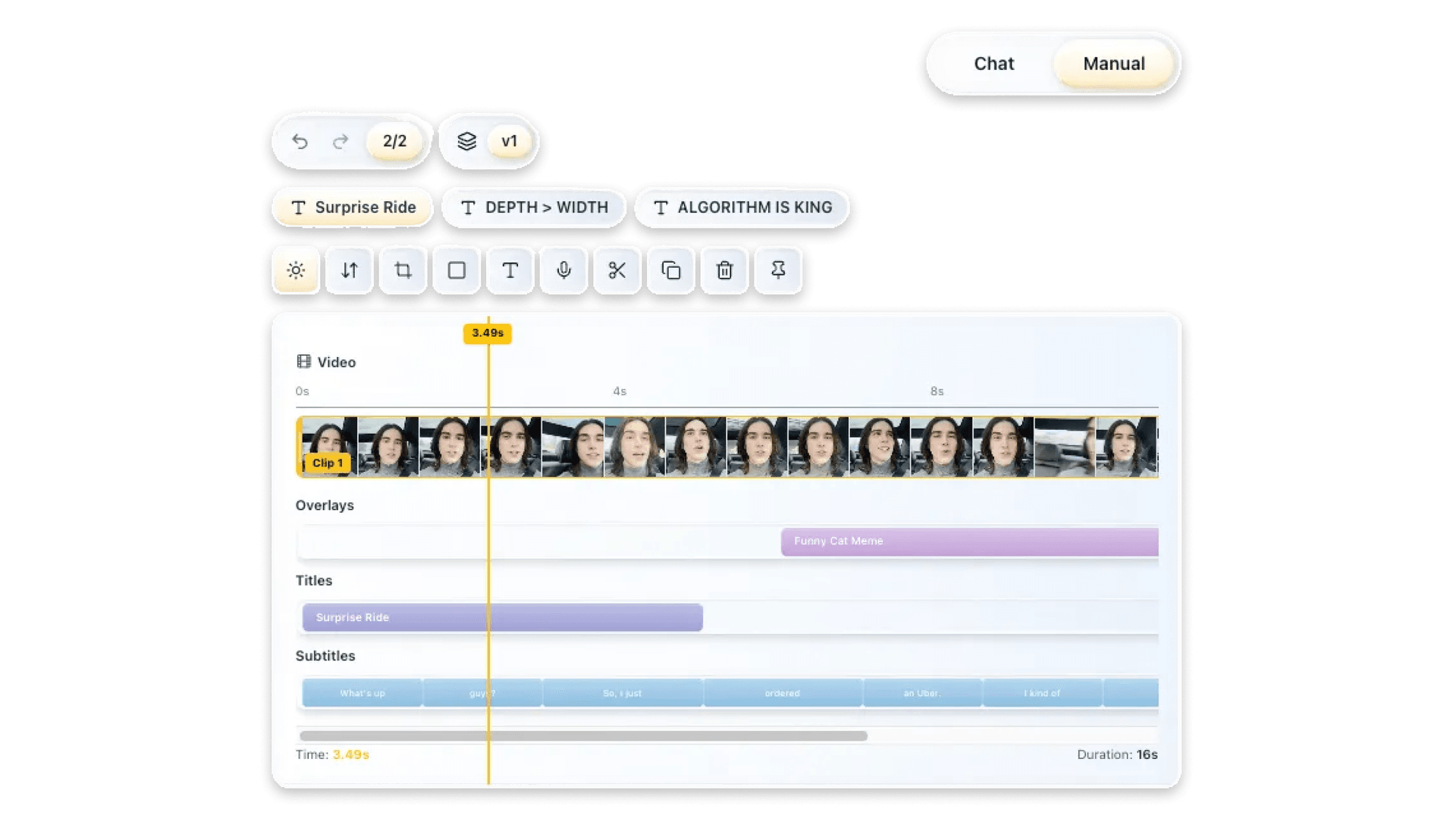
Golden Glass is designed to remain consistent across devices.
The environment on iOS is the same environment on Android, web, tablet, desktop, and new form factors. Files, edits, and state stay synchronized. The UI adapts per device, but it does not fragment.
This is not novelty. It is operational continuity.
Why Golden Glass exists
We are building software that moves from one-off prompts to continuous operation.
That requires an interface that can hold context, express system state clearly, and keep humans oriented and in control.
Golden Glass is that layer.
It is rolling out across Rkive now.