
Introducing: Ideas
Ideas is Rkive’s new way to work on content before it’s recorded. It’s not a notes feature. It’s an AI-native, production-ready medium where you develop scripts conversationally, add cues and structure, and move directly into recording with Rkive Camera.
Ideas introduces a new working surface inside the Rkive content creation OS. Instead of treating ideas as plain text, Ideas are built for production: created and refined conversationally with AI, shaped using context from your previous posts, performance, and strategy, and structured into drafts designed to be recorded. Ideas connect directly to Rkive Camera with one-tap recording and automatic teleprompter loading, and can be scheduled to send reminders when it’s time to shoot. Together with Golden Glass and Rkive Camera, Ideas complete a continuous flow from thinking to publishing.
Introducing: Ideas
Where content takes shape before it’s recorded
Rkive today introduces Ideas, a new way to work on content inside the Rkive content creation OS.
Ideas are not notes, drafts, or digital sticky pads. They’re designed as the place where content is actively developed, refined, and prepared for recording, using AI as a working partner rather than a separate tool.
Built for content, not for note-taking
Most tools treat ideas as plain text.
You write something down, maybe polish it a bit, and then move elsewhere to turn it into content. Structure, pacing, and production thinking happen later, often while recording or editing.
Ideas were built to change that.
They’re designed to minimize the effort required to structure your thoughts, while maximizing how developed and recording-ready the result becomes.
Conversational by default
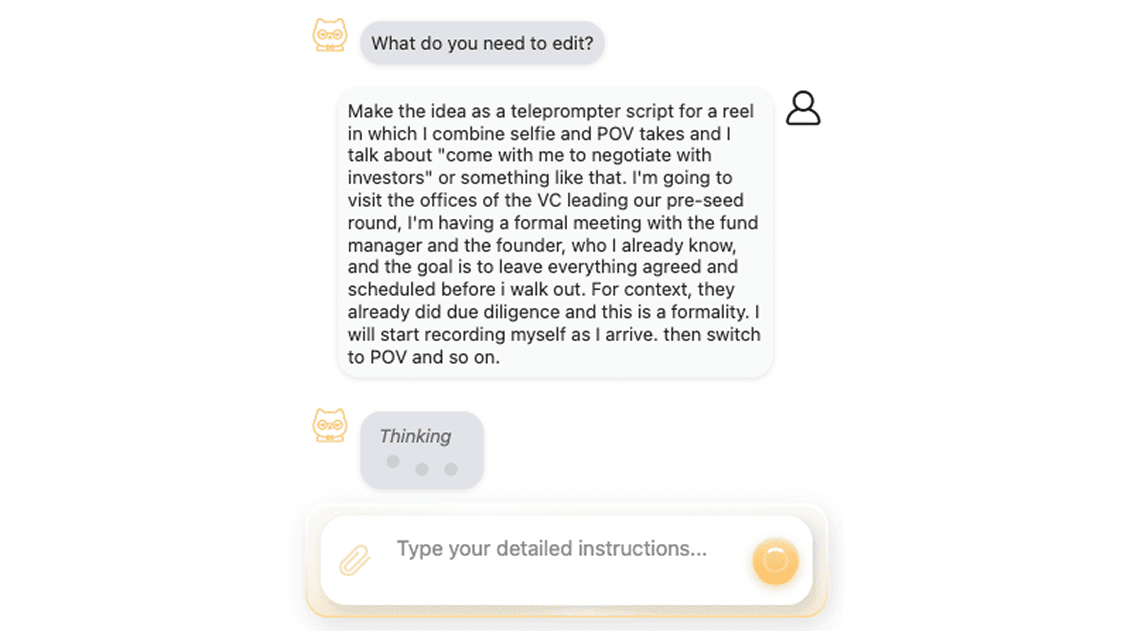
Ideas are created and refined conversationally.
Instead of writing scripts manually, you talk to Rkive about what you want to make. You describe what you want to say, explore angles, adjust tone, or ask for alternatives. Rkive turns that conversation into a structured draft.
Because Rkive is aware of your previous publications, performance, and strategy, it can refine ideas in context. It doesn’t just generate text. It helps shape something that fits your voice, your audience, and the platform you’re recording for.
More than text
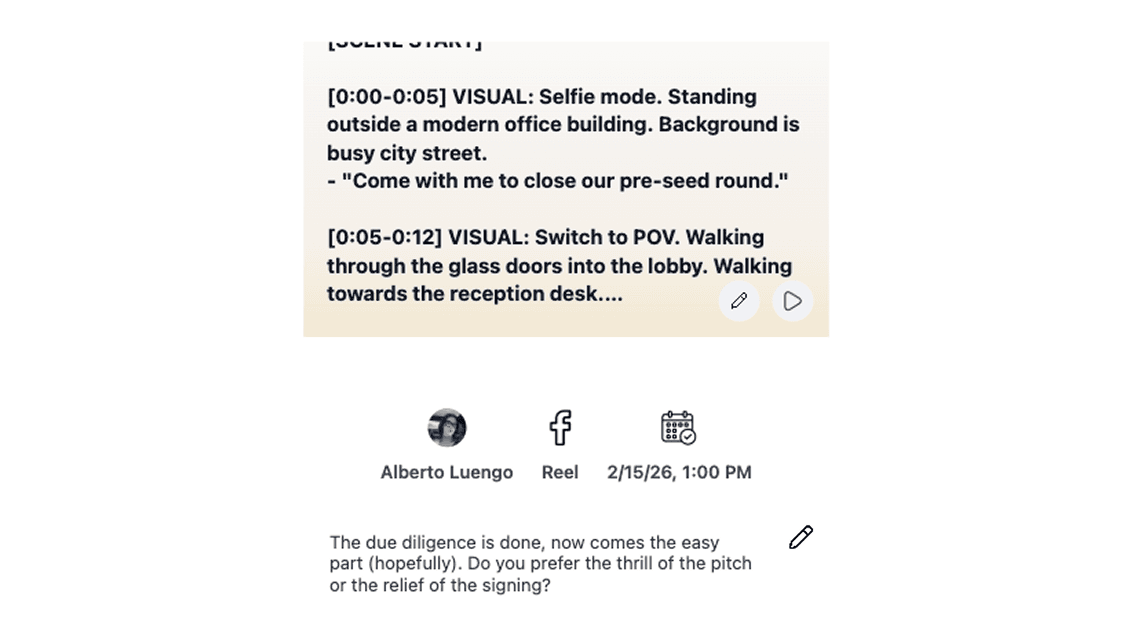
An Idea isn’t just a script.
It can include:
- pacing suggestions
- emphasis cues
- reminders of what to show or reference
- rough timing guidance
- production annotations meant for recording
The result is not a note you later translate into content. It’s a working draft that already understands how it will be recorded.
Ideas are written with production in mind from the start.
Directly connected to recording
Ideas are tightly integrated with Rkive Camera.
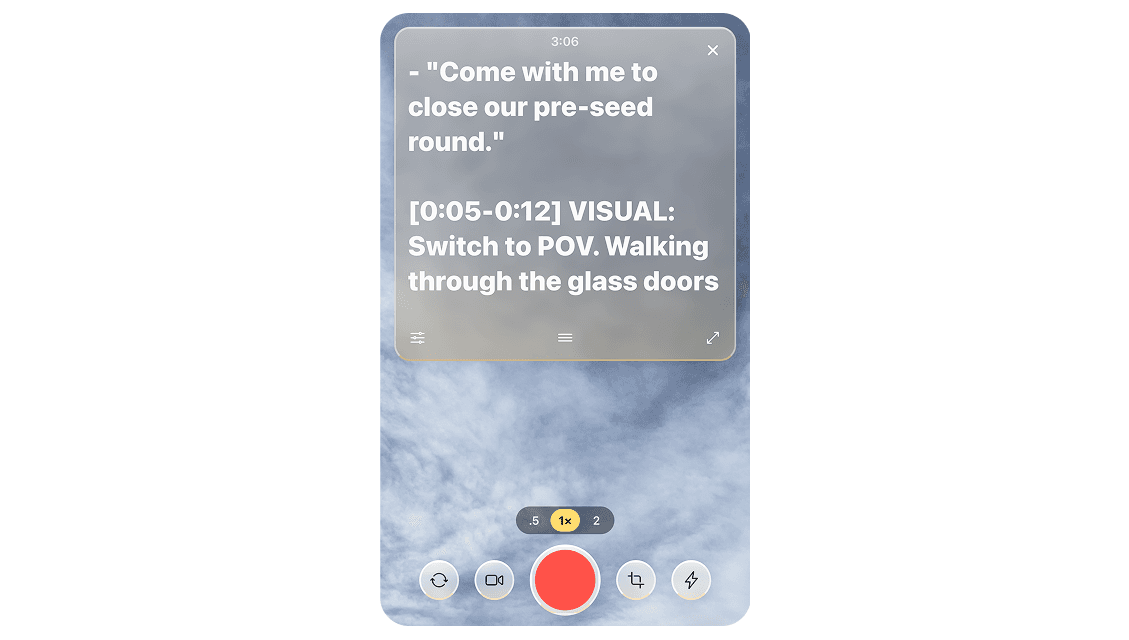
When you’re ready to record, tapping Record on an Idea opens the camera with that draft already loaded into the teleprompter. There’s no copying text, no setup, and no context switch.
You can review the script, make last-minute adjustments, and start recording immediately.
If you revise the Idea, the updated version is what appears the next time you record. Writing, planning, and recording stay connected, but nothing is locked in. You iterate by talking to the system, not by managing documents.
Ideas can also be scheduled. Instead of being published automatically, scheduled Ideas send you a reminder when it’s time to record. This makes Ideas work like lightweight production call sheets, helping you plan recording sessions without turning planning into overhead.
Designed to stay fluid
Ideas are intentionally not treated as final documents.
They’re meant to evolve. You can refine them before recording, adjust them after a take, or revisit them later based on performance or feedback. The system keeps the relationship between the Idea, the recording, and the final post intact.
This makes iteration natural instead of disruptive.
Why Ideas exist
Ideas exist because the hardest part of content creation is not editing or posting. It’s turning a thought into something ready to record.
That step deserves tools that actively help, rather than neutral containers that leave all the work to you.
“It’s not about making a digital post-it. It’s about creating a new medium of work that fully leverages AI and is tailored to content creation. Ideas are where thinking turns into something you can actually record.”
— Alberto Luengo, CEO & Founder
A foundation for AI-native creation
Ideas are a core part of Rkive’s AI-native approach.
They give the system context about what you’re trying to say, how you’re saying it, and why. That context carries through recording, editing, and performance analysis.
Ideas are not an add-on. They’re foundational to how Rkive works.
Available now
Ideas are rolling out as part of Rkive.
plan → record → edit → publish,
inside one coherent system.